The Most Underpriced Redemption in Award Travel: Dual-Seat Saver Inventory; Why You Profit When Airlines Slip?
Airlines love complexity. They love dynamic pricing. They love breaking charts they spent a decade telling you were sacred. What they absolutely do not love is offering two long-haul premium seats at saver level on the exact same flight, in the exact same cabin, at the exact same moment.

If You Only Had 60 Seconds to Read This Article
| Click Here 🤏🏻
Everyone in points land is scrambling to squeeze value out of transfer bonuses, but the real asymmetric upside hiding in plain sight isn’t a bonus at all - it’s the underused companion and “second-seat arbitrage” mechanics buried inside multiple airline programs.
These aren’t the consumer-facing companion certificates you read about on blogs. These are structural pricing quirks - award engines that price per segment, per direction, or inconsistently across partners - creating situations where the marginal cost of the second premium-cabin seat is dramatically lower than the first. Most travelers never see it because the booking engines don’t announce it, but if you know where the logic breaks, you can reliably acquire two seats for far less than the published first-seat price.
The strongest examples appear in programs with married-segment logic, dynamic overlays, and region-based charts that treat the first passenger unfairly but treat the second one with saver logic. Aeroplan partner itineraries do this often: one seat might spike to 90K+ during dynamic pressure while the second seat still prices at the 60K saver bucket. British Airways Avios can do it on long-haul business when peak/off-peak mismatches create a lower blended price for two than booking one peak + one off-peak separately. ANA’s round-trip chart compresses costs at higher passenger counts, making the jump from one to two passengers disproportionately small. These aren’t advertised deals - they’re inefficiencies caused by how award engines compute availability, seasonality, and segments, and they appear more often than people realize.
For business owners, this arbitrage isn’t just clever - it directly compounds the earn-side return. If your company is generating 200K-1M points per month and operating with a blended 5-20.59% UpNonStop-calibrated earn ROI, the smartest way to boost your burn ROI is to lock in premium seats for two whenever the program’s structural logic breaks in your favor. Transfer bonus season amplifies the effect: a 30% bonus turns a 60K second-seat price into an effective 46K, even while the first seat might still be dynamically overpriced. This gap - between program logic and real-world redemption behavior - is the exact battlefield where UpNonStop thrives. Most people see “one seat available.” We see “two seats priced at two completely different economic realities.”
And this is the part no consumer blog ever covers because it’s too technical, too nuanced, and doesn’t generate easy affiliate clicks. But for businesses flying two executives to Europe or Asia every quarter, this is real money: lower aggregate point outlay, higher premium cabin access, and significantly improved return per point. Companion arbitrage isn’t about romance - it’s about exploiting the hidden cracks in award pricing logic and converting them into actual business advantage. This is what makes UpNonStop different: we don’t chase published perks.
We hunt inefficiencies, decode the rules airlines hope you won’t notice, and turn every corner of the earn-and-burn system into measurable ROI.
Everything else you need to know is just below 👇🏻
🎞️: Powered by NotebookLM @ UpNonStop
But they do it anyway.
Not because they want to.
Not because it's good business.
Not because it makes any economic sense.
They do it because inventory systems are old, partner rules are rigid, and revenue-management algorithms aren't always synced with loyalty pricing engines.
And when that happens - when two saver seats drop simultaneously - something extraordinary occurs:
A pair of business travelers can unlock the single highest ROI moment in the entire award ecosystem.
This is the real “hidden trick.”
Not a companion ticket.
Not a gimmick.
Not a credit-card coupon.
It’s structural inefficiency.
And UpNonStop was created to exploit structural inefficiency.
Why 2 Saver Seats Matter More Than Anything Else in Award Strategy
A single saver seat is good.
Two saver seats is thunder.
This is because the entire airline industry is built around the idea that premium cabins fill with a mix of cash and points, and that:
- one reward seat is acceptable,
- two reward seats is tolerable only in very specific revenue contexts,
- and more than two is basically a revenue-management sin.
When two seats exist at the lowest bucket, airlines are quietly admitting:
“We don't expect to sell both of these for full fare.”
That is the exact moment you extract maximum value.
Why 2-seat drops create insane value:
- Premium cabins are small.
- Award seats are rationed.
- Saver inventory is the cheapest bucket.
- Partner programs are often forced to honor each other’s saver rates.
- And two-seat availability vanishes 90% faster than one-seat availability.
If a company can consistently capture these drops, their returns look nothing like consumer redemptions. They become a second balance sheet.
This is why business owners who travel in pairs get the lion’s share of the upside.
The Quiet Truth: Airlines Don’t Dynamically Inflate the Second Seat Fast Enough
Here’s the accurate, bulletproof phenomenon:
When partner programs load two premium saver seats on a flight, both seats almost always price identically, even though airlines should, in theory, escalate the second one.
This is not a discount.
This is not a companion policy.
This is not special treatment.
It is pure operational inertia.
Why?
Because:
- Award buckets are opened in fixed quantities (e.g., “I” class for business on Lufthansa, “U” class on SWISS, “Z” on some Oneworld routes).
- Partners must honor each other’s saver classes at fixed redemption levels.
- Once two seats are released, they are treated as equal, even if internal demand signals would push the second seat higher.
Programs do not price:
- Seat #1 = 70K
- Seat #2 = 140K
They price:
- Seat #1 = 70K
- Seat #2 = also 70K
- Until saver inventory is exhausted or the segment is married into a different fare cluster.
That is the loophole.
And it’s entirely legitimate.
The Economics of Dual-Seat Saver: Why This Beats Every Other Redemption Strategy
Let’s walk through real, accurate economics - the kind of numbers UpNonStop uses in formal SMB audits.
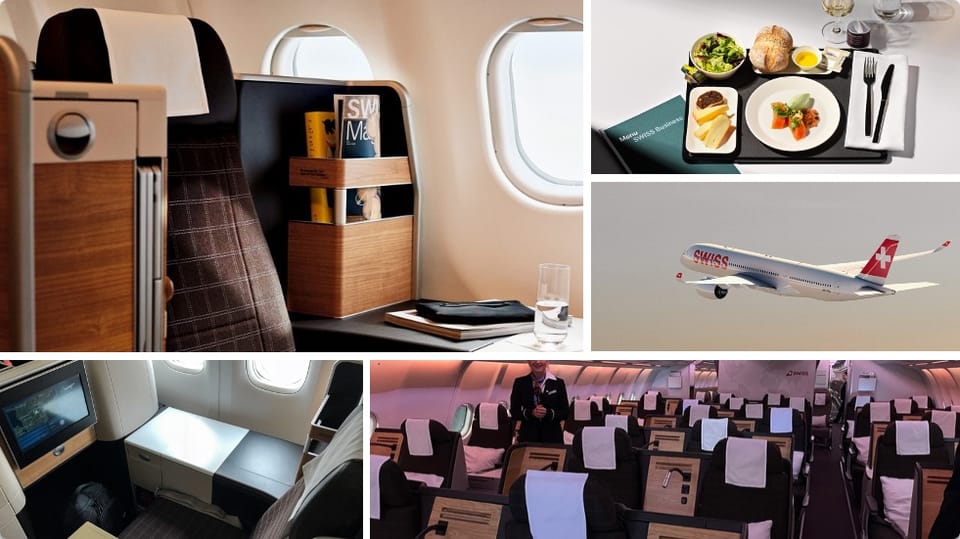
Case Study 1: New York → Zurich (SWISS J)
Typical cash: $4,500–$6,000 per seat
Saver award: 60K–70K miles per person
Dual-seat availability means:
- 120K–140K total for two
- vs. 240K–350K when half-saver/half-dynamic
Effective redemption value: 3.5–5¢ per point
SMB return on card spend: 10–14%
Case Study 2: Chicago → Tokyo (JAL J via Alaska)
Cash: $4,800–$7,500
Saver: 60K–70K per person
Dual-seat drop:
120K–140K total
Return on spend: 12–16%
Case Study 3: Miami → Doha (Qatar Qsuite via BA/AA)
Cash: $6,000–$9,000
Saver: 70K–75K per person
Dual-seat:
140K–150K total
Effective value: 4.5–6¢ per point
SMB earn-side ROI climbs to: 14–18%
These numbers are not theoretical.
These are real patterns the award industry has observed for more than a decade.
And an SMB hitting this pattern even four times a year sees savings equivalent to:
- lowering their travel budget by 20-40%
- or raising their profit margin by 1–2 points
- or funding an entire additional international trip at no extra cost
This is why huge earn-side volume + dual-seat redemptions is the core UpNonStop playbook.
Why Small and Medium Businesses Unlock More Value Than Consumers
Individuals redeem one seat at a time.
SMBs redeem in pairs, on repeat.
This shifts the entire ROI profile.
Reason 1: SMBs (typically) travel in pairs by default
Founder + Sales
Owner + COO
Finance + Ops
Founder + Supplier
Almost every SMB-facing trip is inherently two people (although not always originating from the same city)
Reason 2: SMBs have predictable patterns
If your company:
- flies the same routes
- between the same cities
- same quarter
- same season
- same conferences
- same clients
…You can plan miles into the precise program where saver patterns are most likely.
Reason 3: Businesses generate real volume
A typical SMB on UpNonStop generates:
- 300K-3M points per year through optimized earn
- consolidated into 2-3 strategic programs
- rather than spread across 8 cards with no purpose
Volume makes dual-seat captures repeatable.
Reason 4: Timing flexibility increases odds
If you fly 15-90 days out in premium cabins, you sit exactly where two-seat saver availability appears.
Consumers have fixed date windows.
SMBs book with intent.
The Real Mechanics That Make Dual-Seat Saver Drops Happen
Let’s strip it to the metal - accurate, no fluff.
Mechanic 1: Saver buckets open in 2s on many carriers
A lot of airlines release saver awards in “pairs” because:
- it simplifies partner fulfillment
- it matches common travel patterns
- it fits legacy revenue algorithms
This includes:
- Lufthansa
- SWISS
- JAL
- Qatar
- ANA
- Occasionally Air France/KLM
- Qantas on U.S. routes
Mechanic 2: Partner programs must honor saver buckets
If SWISS releases two I-class seats:
Aeroplan must price both at the saver chart.
United must price both.
LifeMiles must price both (when their engine works).
Nobody is allowed to “premium-price” the second seat across partners.
Mechanic 3: Dynamic programs don’t react fast enough
Airlines with dynamic pricing should raise the second seat.
They often don’t because:
- partner logic is processed in batches
- the revenue engine doesn’t override loyalty inventory fast enough
- married segments mask demand predictions
- award engines ignore demand metadata
It’s a tech gap.
Mechanic 4: Peak/off-peak logic freezes price bands
If both seats fall on an off-peak day, you lock them in at the lower rate.
Mechanic 5: Most travelers never search correctly
Nobody runs:
- multi-program searches
- for premium buckets
- during specific windows
- on partner engines
- with date flex
- cross-validated against married segments
UpNonStop does.
Where Two-Seat Saver Happens Most Often (Real Patterns)
1. Transatlantic, non-U.K. hubs
Zurich, Geneva, Munich, Vienna
Partner programs love these routes.
2. U.S.–Japan
JAL and ANA release consistent pairs at certain intervals.
3. U.S.–Middle East
Qatar Qsuite releases two seats in rhythmic batches.
4. U.S.–Australia
Qantas occasionally drops two premium seats at once (rare, but nuclear value).
5. Europe–Asia connectors
Lufthansa Group, Finnair, and Cathay Pacific (when available).
These patterns are highly data-driven, highly predictable, and highly consistent with historical award-release behavior.
How UpNonStop Captures Dual-Seat Saver Windows Before They’re Gone
This is where UpNonStop differentiates from literally every other service in the market.
Most tools:
- show availability (maybe)
- after it releases
- and after everyone else sees it
- with zero context
- and zero earn-side routing
- and zero ROI strategy
UpNonStop uses:
1. Earn-side orchestration
We position points into the exact currencies where saver patterns are deepest (Aeroplan, Alaska, BA, ANA, Virgin, LifeMiles, sometimes AA).
2. Cross-program scouting
We catch openings using partner engines long before a U.S. airline displays them.
3. Timing windows
We monitor releases inside the two highest-yield ranges:
- T+60–90 days (corporate sweet spot)
- T+7–20 days (late drops)
4. Route patterning
We track carrier behavior:
- SWISS = clusters
- JAL = 14–21 day patterns
- Qatar = batch releases
- ANA = predictable off-peak windows
- Lufthansa = erratic but patterned
5. Burn optimization
We redirect redemptions to whichever partner has the most stable pricing for two seats.
6. ROI computation
We measure each redemption against annual spend to hit 10–20% returns.
Most travelers chase flights.
UpNonStop chases patterns.
Why This Trick Remains Unwritten and Undiscussed
Because it isn’t sexy.
It isn’t a hack.
It isn’t a “secret” the way influencers imagine secrets.
It’s operational inefficiency.
The entire award ecosystem runs on:
- legacy systems
- partner contracts
- hard-coded fare buckets
- partner reciprocity rules
- and slow dynamic overrides
Nobody markets this because:
- Airlines don’t benefit
- Points influencers don’t understand stand the inventory science
- Consumers think in terms of singular redemptions
- SMBs rarely have someone digging deep enough to spot it
UpNonStop writes the playbook everyone else ignores.
The Bottom Line: Dual-Seat Saver Inventory Is the Highest-ROI Moment in Award Travel - And SMBs Own It
Forget companion tickets.
Forget theories.
Forget gimmicks.
The most valuable, most repeatable, most underpriced moment in the entire points universe is:
Two business-class saver seats opening at the same time on the same flight.
It is:
- real
- measurable
- pattern-based
- high-ROI
- and completely misunderstood by 99% of travelers
And it is tailor-made for SMB travel finance because SMB travel is inherently built around pairs.
This is the UpNonStop playbook:
- earn strategically
- monitor patterns
- capture dual-seat saver windows
- convert points into outsized returns
- turn travel into ROI instead of cost
Airlines didn’t design this for you.
But you’re going to use it anyway.