The Great Loyalty Mirage: Why Hotel Chains Keep Devaluing Rooms While Pretending They’re ‘Dynamic’ (And How to Still Win in 2026)
Hotel loyalty programs used to be the calm corner of the travel world. Airlines were the ones playing games with dynamic pricing, peak calendars, blackout zones, and “we’re sorry, there are no seats for you even though the cabin is half empty."
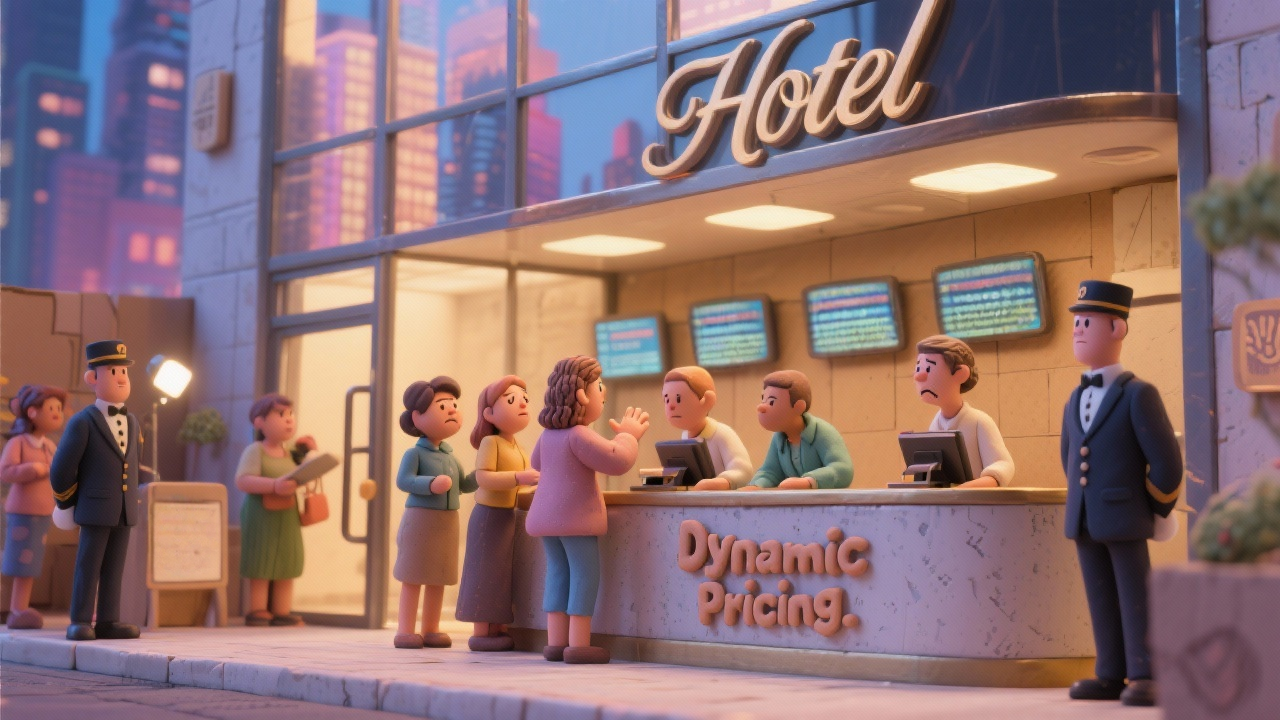

If You Only Had 60 Seconds to Read This Article
| Click Here 🤏🏻
Hotel chains didn’t “add flexibility” - they quietly killed predictable award charts and replaced them with dynamic shadows. Marriott’s ranges ballooned, Hilton anchors to cash rates, IHG floats daily, and even Hyatt now drifts upward. Officially nothing changed; in practice, everything did.
This shift isn’t random. Loyalty programs are billion-dollar profit centers selling points to banks, and the only way to protect margins is to make redemptions cost more. Instead of announcing devaluations, chains hide them inside floating bands, shrinking standard rooms, and inventory games that push travelers into higher point totals without noticing.
But even in this chaos, patterns exist. Midweek dips, shoulder-season mispricings, misfiled premium rooms, multi-night pricing traps, and post-event award drops all create windows of outsized value. The programs want you overwhelmed; the strategy is to spot the repeatable gaps they quietly leave behind.
UpNonStop turns that volatility into leverage for SMBs: surgical earn strategy, multi-chain optimization, precision timing, and portfolio-level booking instead of trip-by-trip guessing. Hotel loyalty didn’t die - it became an expert’s market. And we make sure you always play on the expert side.
Everything else you need to know is just below 👇🏻
🎞️: Powered by NotebookLM @ UpNonStop
Hotels? They were stable. Predictable. Almost boring.
The same room cost the same number of points, month after month, season after season. You could plan. You could forecast. You could actually build a travel strategy that didn’t feel like trying to trade options during a market crash.
Then 2020 happened. And 2021. And 2022. And now we’re living in an era where Marriott, Hilton, IHG, and even (yes) Hyatt are performing the loyalty equivalent of a magic trick: they’re making your points disappear while telling you nothing has changed.
Our article is about the shift nobody wants to talk about:
the hotel loyalty devaluation that’s already here, the mechanics behind how it works, and the exact strategies to outplay it in 2026.
Because if you don’t understand what’s happening, you’ll pay more points for worse rooms without even realizing you’re being played.
Our job is to make sure that never happens to you.
Let’s dig into it...
The Mirage Begins: How Hotels Quietly Killed the Old System
Hotel loyalty used to rely on three pillars:
- Fixed award charts
- Transparent categories
- Predictable pricing windows
That era is now over.
Chains won’t say it out loud - because admitting it would set off a riot - but every major program has either:
- killed categories outright,
- blurred categories into useless ranges, or
- introduced “dynamic-ish” pricing without using the word “dynamic.”
Let’s break down how each chain is doing it.
Marriott: The King of “We Didn’t Devalue, We Just Introduced Flexibility”
Marriott killed categories in 2022 and replaced them with a system that is absolutely dynamic but branded not dynamic.
The story Marriott tells:
“You’ll still find rooms within their traditional ranges 97% of the time.”
The reality:
Those ranges expanded. Then expanded again. Rooms that were once pinned to 35K are now anywhere from 29K to 93K depending on the day.
This is the mirage.
Nothing “official” changes.
The program just slides the dial upward, night after night, until the chart you remember becomes a ghost of a ghost.
Hilton: The Original Dynamic Program That Won by Confusing Everyone
Hilton has been dynamic for years. The trick?
They never stopped calling it “ranges.”
A room that’s 42K one night and 97K the next is technically “within the band.”
A band so wide you could drive a Boeing 777 through it.
Hilton decides what you pay based on cash rates.
Cash rates decide points.
You are essentially on a floating exchange rate with no guardrails.
Where’s the protection?
There isn’t any.
IHG: The Placeholder Award Program That Keeps Moving the Placeholder
IHG’s “dynamic” pricing correlates so directly to cash rates that you can practically graph it.
You aren’t picking award nights.
You’re picking a theoretical USD-to-points conversion that shifts every day.
IHG also removed elite award guarantees quietly.
Another mirage: nothing announced, but value erodes month after month.
Hyatt: The Holdout… Until It Wasn’t
Hyatt held firm longer than anyone.
Fixed chart. Predictable categories. Minimal games.
But 2023-2024 brought:
- category bumps at scale
- peak/off-peak pricing spreads widening
- more hotels creeping to Category 6, 7, and 8
- noticeable scarcity of standard rooms at popular properties
Hyatt didn’t go dynamic.
They just expanded the Category 1-8 universe until everything you actually want quietly floats upward.
Not dynamic on paper.
Dynamic in practice.
Why This Shift Happened
(And Why It Won’t Reverse)
The reason for the loyalty mirage boils down to economics, not “demand” or “seasonality.”
Here’s the real story.
1. Loyalty Programs Became Profit Centers
Marriott and Hilton generate billions selling points to banks.
Points aren’t an expense - they’re revenue.
If you sell more points, you must protect the balance sheet.
How?
By making redemptions cost more.
If 100 people used to buy 100 apples, and now 500 people buy the same apples, the store raises the price.
It’s that simple.
2. Chains Want Cash Back, Not Award Guests
A $450 cash night yields full revenue.
A 40K-point redemption reimburses the hotel at:
- about $35-$85 if the hotel is empty
- up to ~$225 if the hotel is nearly full
That gap?
Hotels hate it.
So hotels do the obvious:
release fewer standard rooms, push more “premium rooms,” and hide the cheap inventory.
3. Dynamic Pricing Is Easier Than Transparency
Fixed charts make chains responsible for honest pricing.
Dynamic charts make chains nimble.
Guess which one they prefer in a post-COVID, inflation-heavy, revenue-obsessed world?
4. Consumers Don’t Notice Gradual Devaluation
If Marriott announced a “30% award price hike,” forums would burn.
But if cash rates rise, and “dynamic flexibility” adjusts award rates, it’s quiet.
A $450 room going from 35K → 52K → 68K → 93K looks like a pricing engine doing its job.
But it’s doing their job, not yours.
The Consequences: What Travelers Lose If They Don’t Adapt
The loyalty mirage has three outcomes:
1. You Overpay Without Knowing It
If you redeemed 70K for a property that used to be 35K just two years ago, was it really a “good redemption”?
Or did you fall for the narrative?
2. You Mis-time Bookings
You assume that booking early = cheaper in points.
Not always true anymore.
Dynamic-ish programs fluctuate so heavily that the best price may appear:
- midweek
- last-minute
- 2-5 days after demand drops
- after a competitor fills up
- after cash rates wobble
If you aren’t tracking patterns, you lose.
3. You Stop Recognizing Value - And That’s the Goal
If every room is “within the band,” you stop comparing.
Chains love this.
UpNonStop hates this.
Because our job is to find the patterns they swear don’t exist.
The Patterns The Chains Don’t Want You to Notice
Even under dynamic chaos, there are mathematical weaknesses.
Patterns.
Glitches.
Predictable human behavior inside the so-called “flexible pricing universe.”
Here are the big ones - proven, repeatable, and extremely powerful.
1. Midweek Dips (Tue/Wed/Thu)
Cash rates fall midweek for leisure destinations.
Dynamic programs follow.
Hotel: $570 Fri-Sun → $320 Tue-Thu
Points: 48K Fri-Sun → 29K Tue-Thu
If you can pivot your stay by 24-48 hours, you win.
2. Shoulder Season Windows
This is the most overlooked pattern in hotel award travel.
Hotels price seasonally, but loyalty programs don’t reset the ranges often enough.
Meaning:
If a hotel goes into low season but Marriott/Hilton/IHG doesn’t refresh their points matrix fast enough, award prices stay artificially low even as cash rates spike.
This happens:
- in Miami after New Year
- in Hawaii during mid-April
- in Europe mid-October
- in the Caribbean late August
- in ski towns early December
- in the UAE during shoulder Ramadan windows
Repeating pattern:
Cash spikes, but points stay anchored to old seasonality.
That gap is your arbitrage.
3. Premium Room Glitches
All chains have them:
- Marriott: premium room incorrectly marked as “standard”
- Hilton: suites that randomly price below standard on low demand nights
- IHG: corner rooms coded as "standard" for historical reasons
- Hyatt: club rooms pricing lower during off-peak than standard peak
These are the hotel equivalent of “award fare buckets misfiled.”
They’re real.
They’re bookable.
And UpNonStop hunts these like trophies.
4. Single-Night Gaps
Multi-night stays price at the highest nightly rate.
Chains hide this.
Example:
Night 1 = 32K
Night 2 = 83K
Night 3 = 34K
A 3-night stay will price at:
83K x 3
If you break it into 3 separate bookings:
32K + 83K + 34K
Savings: 100K+ points
Hotels know this.
They assume you don’t.
5. The 1-5 Day “Demand Decay” Drop
Look at this very carefully:
When a big event ends (convention, festival, sports game) award pricing drops instantly while cash rates take 12-48 hours to follow.
It’s a gap in the algorithm.
Use it.
Where Value Still Lives in 2026
Devaluation is real.
But value isn’t dead.
You just need to know where the oxygen pockets are.
1. Hyatt (Still the Most Rational Program)
Even after creeping devaluations, Hyatt is still:
- the most stable
- the least dynamic
- the most transparent
- the least abusive
Key value pockets:
- Category 1-4 hotels in Asia
- SLH properties still underpriced
- Off-peak awards in Europe
- U.S. business hotels priced absurdly low on weekends
If you’re optimizing earn → burn → repeat, Hyatt is still the anchor.
2. Marriott (Value in Weird Places)
Marriott lost the plot - but not everywhere.
Where the value still hides:
- Airport hotels (“dead zones” for dynamic pricing)
- Resorts in low season
- Hotels with inconsistent historical coding
- Properties that suppress premium-room pricing
Plus: 5th Night Free still saves enormous value on long stays.
3. Hilton (The Free Night Certificate King)
Hilton’s dynamic chart is chaos.
But the Free Night Certificate is stability in a bottle.
- Conrad Tokyo
- Waldorf Maldives
- Waldorf Los Cabos
- Conrad Bora Bora
- LXR properties globally
Cash rates: $800-$2,800 per night
You pay: one certificate.
Still unbeatable.
4. IHG (Secret Sweet Spots in Secondary Markets)
IHG’s best value is not in big cities.
It’s in:
- Vietnam
- Malaysia
- Mexico City
- Eastern Europe
- Midwest U.S. business hotels
Niche?
Yes.
Profitable?
Extremely.
How SMBs Can Still Win Big (This Is Where UpNonStop Enters the Chat)
Award travel is no longer for the hobbyist.
It’s for the strategist.
SMBs are uniquely positioned to win in this new world because:
- their spend is consistent,
- their categories are predictable,
- their timelines are flexible,
- and their trips hit the “sweet spot” of business-class air + hotel stays.
Hotel devaluations hurt the casual traveler.
But they actually help SMBs who know how to exploit the volatility.
Here’s how UpNonStop builds hotel strategies that outperform the dynamic mess.
1. Earn Strategy = 70% of Your Value
Most SMBs earn points randomly.
We make it surgical:
- which cards
- which categories
- which months
- which currencies
- which transfer partners
- which break-even thresholds
- which caps to avoid
When you earn deliberately, redemption volatility matters less.
2. Portfolio-Level Booking (Not Trip-by-Trip)
Consumers make bookings.
SMBs should manage portfolios.
We align:
- travel demand calendar
- spend projections
- seasonality
- program rules
- blackout patterns
- chain-specific glitches
Once you treat hotel redemptions like asset management, you win.
3. Multi-Chain Optimization
Most people pick one program.
That’s a trap.
Marriott is good for long stays.
Hilton is good for aspirational stays.
Hyatt is good for consistency.
IHG is good for secondary markets.
We combine them.
The chains expect one-dimensional consumers.
We deliver multi-chain arbitrage.
4. Redemption Timing Windows
UpNonStop tracks:
- when Marriott dips
- when Hyatt resets
- when Hilton recalibrates
- when IHG syncs to cash rates
These windows are small.
But they are predictable.
SMBs win by timing - not luck.
5. The Audit That Pays for Itself
Every SMB leaks points value:
- unnecessary cash stays
- poorly timed bookings
- ignored promos
- suboptimal currencies
- forgotten certificates
- inefficient portfolio spread
- missed transfer bonuses
We close those leaks.
Fast.
The Truth: Hotel Loyalty Isn’t Dying. It’s Evolving Into Something Sharper
The loyalty mirage is frustrating - but it’s not fatal.
Because underneath the “dynamic flexibility,” the exhaustion, the constant headline panic…
value still exists.
It’s just no longer obvious.
You have to dig for it.
You have to understand the mechanics.
You have to study patterns.
Or - you partner with someone who already does.
Hotel loyalty isn’t dying.
It’s simply becoming an expert’s game.
And UpNonStop is built for experts.